Carrera
Carrera
Company
Company
VMware
VMware
Year
Year
2021
2021
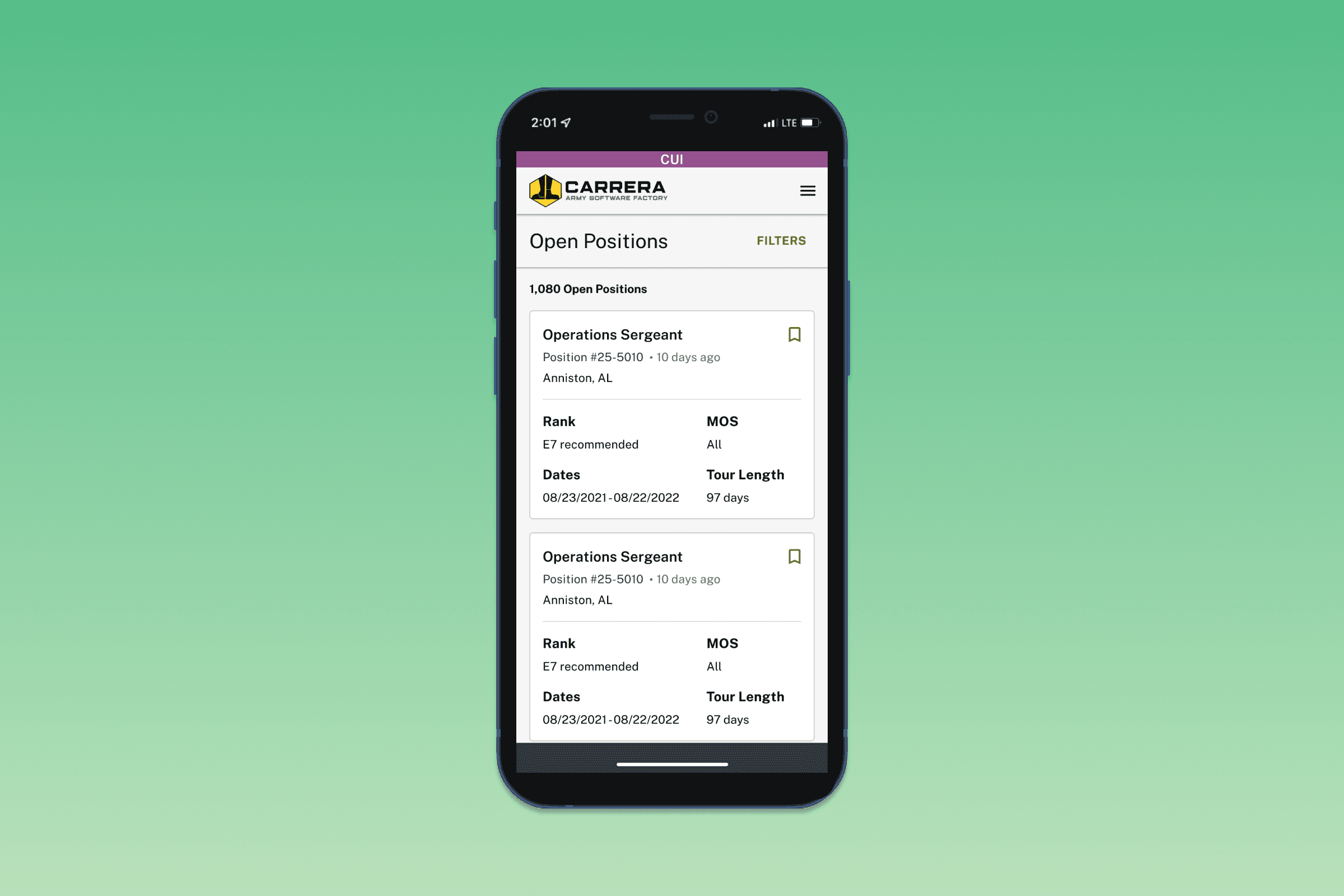
The project itself :
Members of the Army National Guard and U.S. Army Reserve relied on an outdated system to discover and apply for active-duty positions. The process required in-person access to a physical Army base and often resulted in missed opportunities due to timing and usability barriers.
Members of the Army National Guard and U.S. Army Reserve needed a better way to find and apply for active-duty positions.
30,000+ total users to date, averaging 426 weekly users
93 applicants per week and 54 applicants per job on average
Established a reusable model for modernizing Army digital services
Recognized with a Certificate of Appreciation from Army leadership for mentoring and design enablement
As a product designer at VMware Tanzu Labs, I partnered with the Army Software Factory to modernize this experience—improving access, speed, and fairness while helping internal teams learn how to design and deploy user-centered software.
on-base user interviews and on-base usability testing including at The Pentagon
research synthesis and competitive analysis
wireframing and prototyping
high-fidelity UI design and interaction design
animated walkthroughs and illustrations
design system updates
facilitating design studios and solution workshops with the team
All about the user :
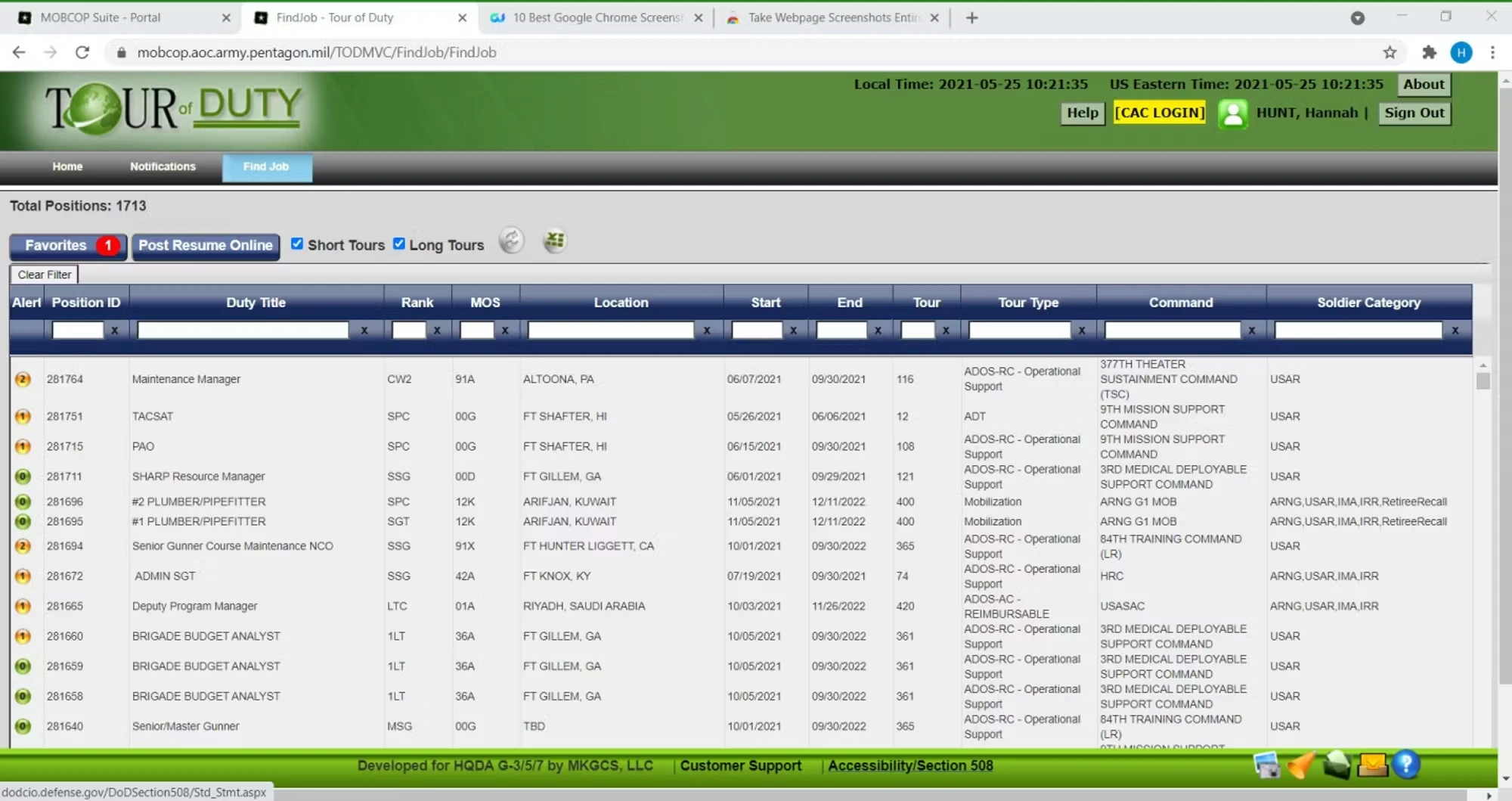
At the time, soldiers had to travel to a physical Army base to access the legacy job portal, which was only available on a limited number of on-site computers.
For many users, this meant driving 30 to 60 minutes just to search for opportunities — and sometimes waiting for access to the single machine that supported the system.
The existing application, Tour of Duty, was outdated and difficult to use.
Soldiers struggled to:
filter and compare available positions,
understand which roles they were qualified for, and complete applications quickly before positions closed.
Because of these barriers, many soldiers lost opportunities simply due to timing.
By the time they gathered required materials and returned to the base to apply, the position was often already filled.
This created unnecessary stress and made the process feel inaccessible and unfair.
The project schematically :
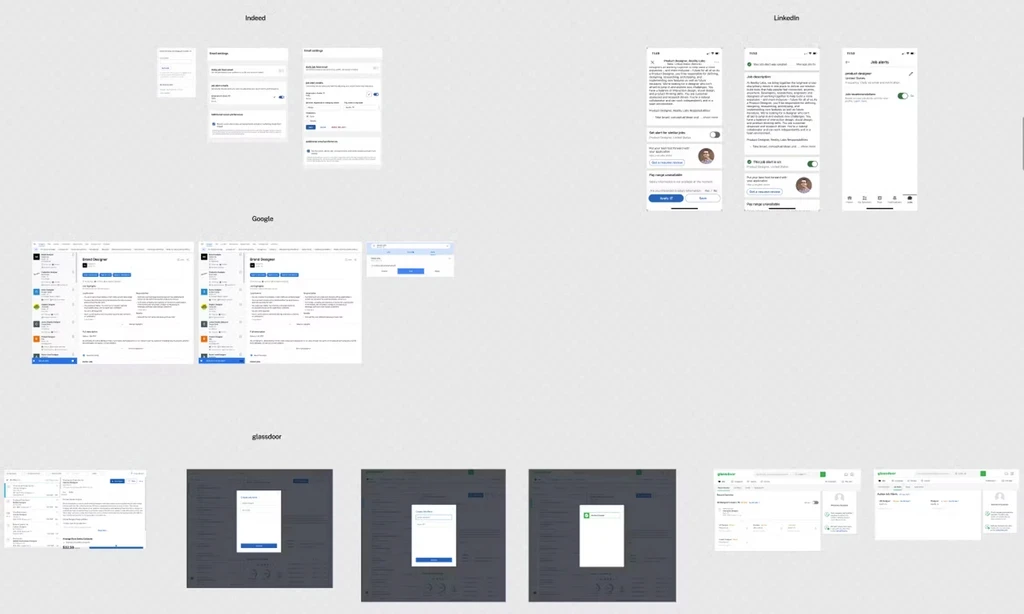
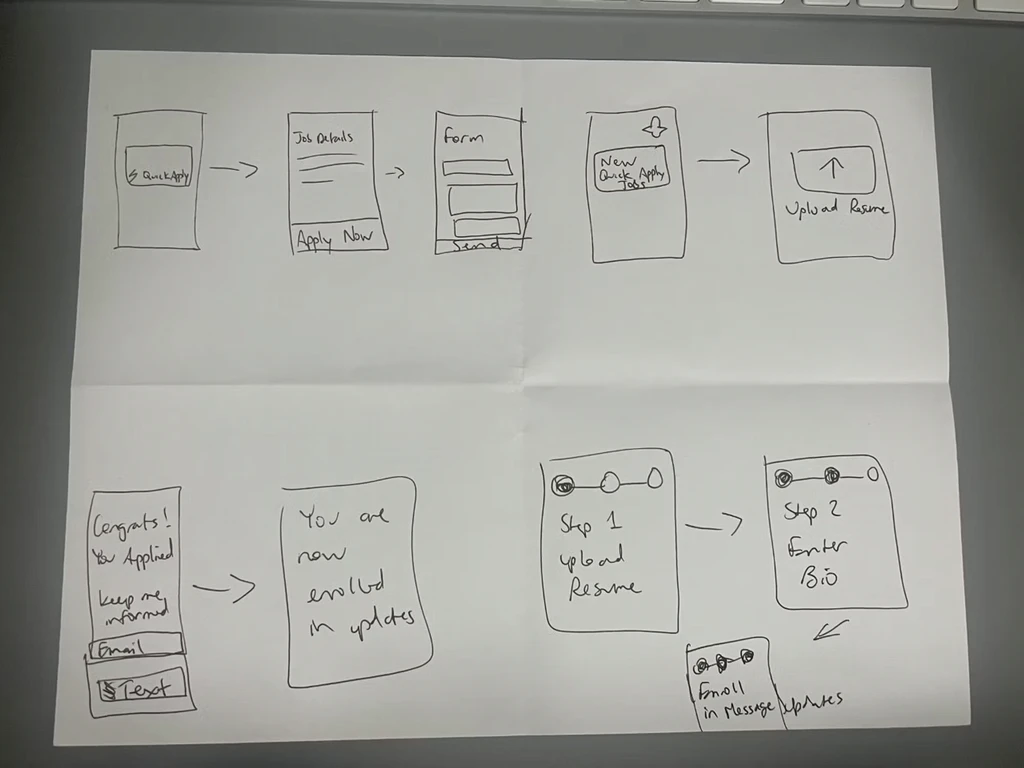
I created various diagrams and storyboards to clarify and analyze the app's information and architecture. Afterward, I sketched paper wireframes and then transitioned to digital wireframes, building a low-fidelity prototype to conduct initial usability studies with users and stakeholders.
More "clear" version of wireframes in a digital form. Also all the important pages are added
in it.
On this step I used the Figma design tool to create digital wireframes of all the pages. Then I bonded all of them into the clear and smooth structure.
The goal is to show how all the pages and things interact with each other.
The clear version :
On this step, first I created a static, high-fidelity design (keeping in mind all the conclusions from the previous phase of usability studies) that is a clear representation of the final product.
After that, I created a high-fidelity prototype of the app.
These are a high fidelity design that represents a final product
I created all the app pages mockups, incorporating the right design elements such as typography, color, and iconography. I also included captivating and visually appealing images, and developed all the necessary components and elements.
The goal was to demonstrate the final Voo's app in as much detail as possible.
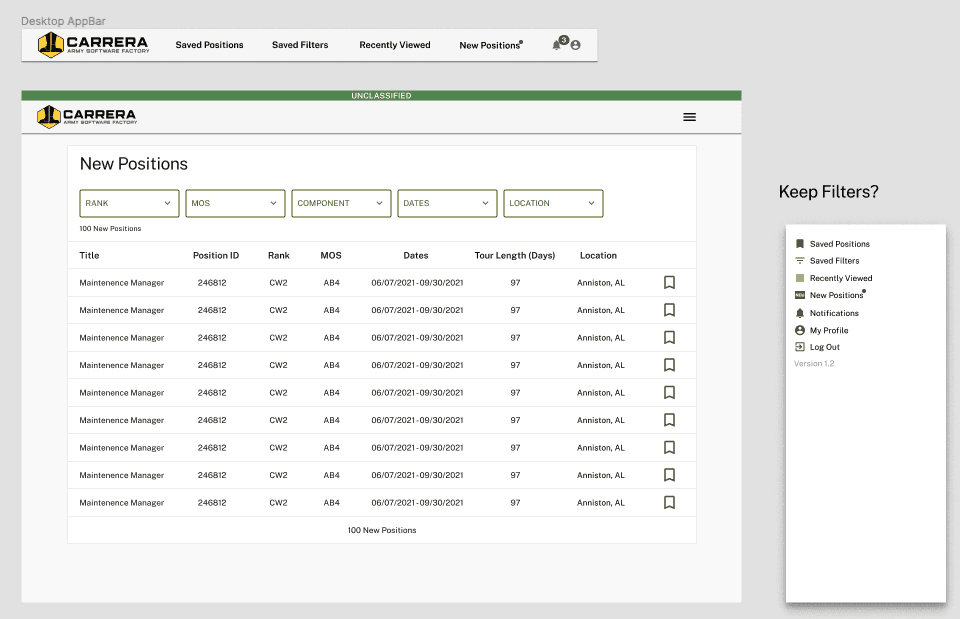
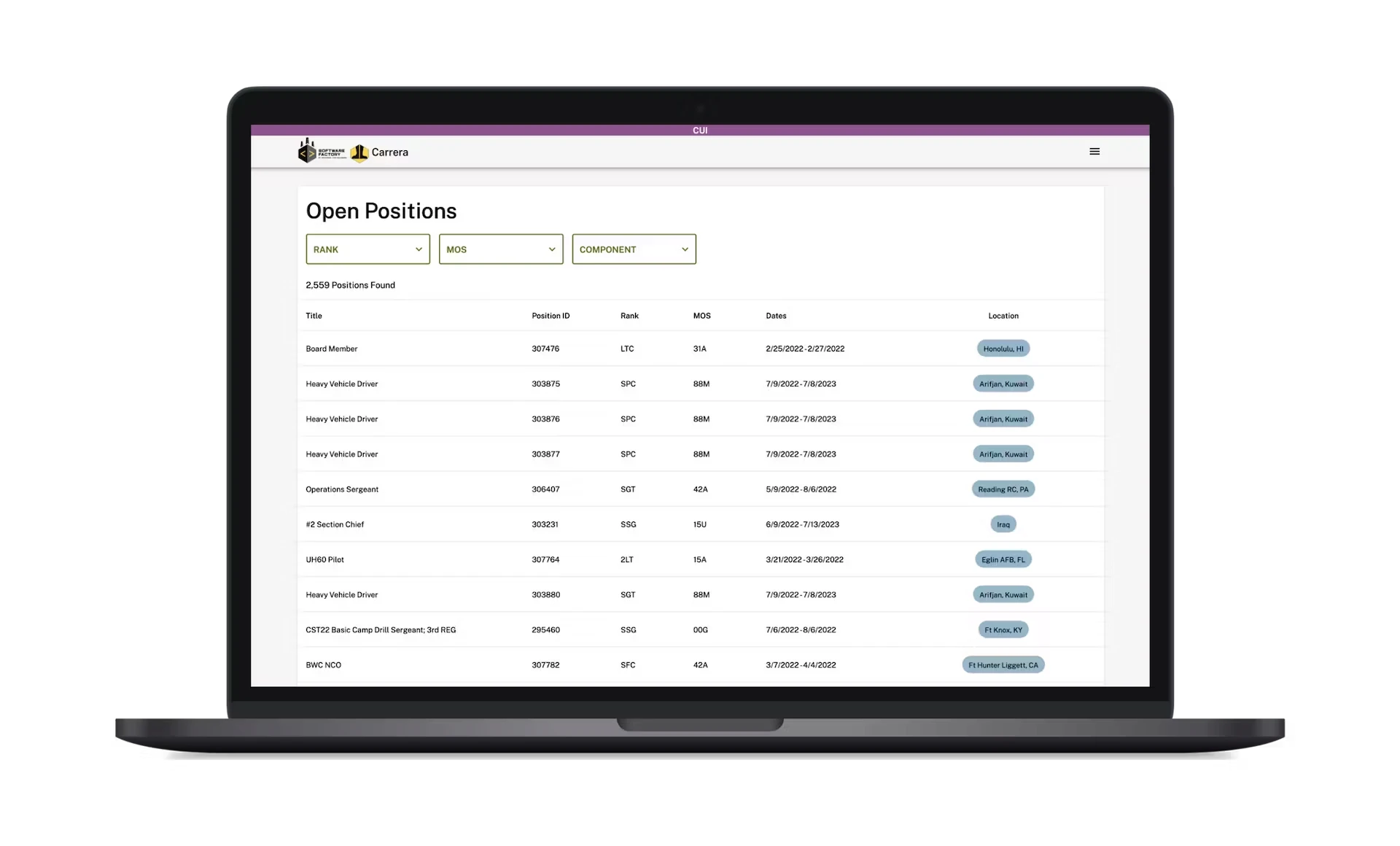
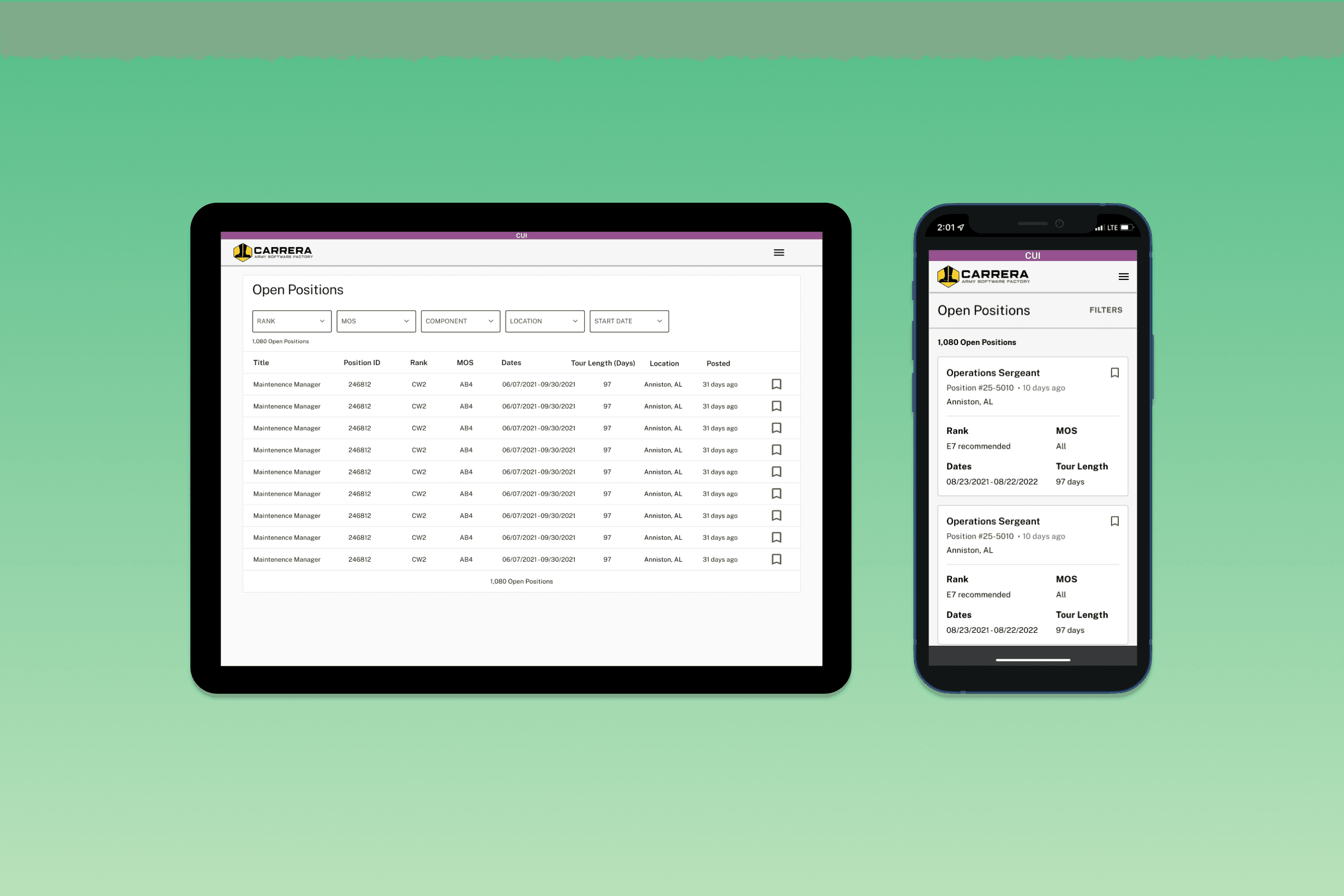
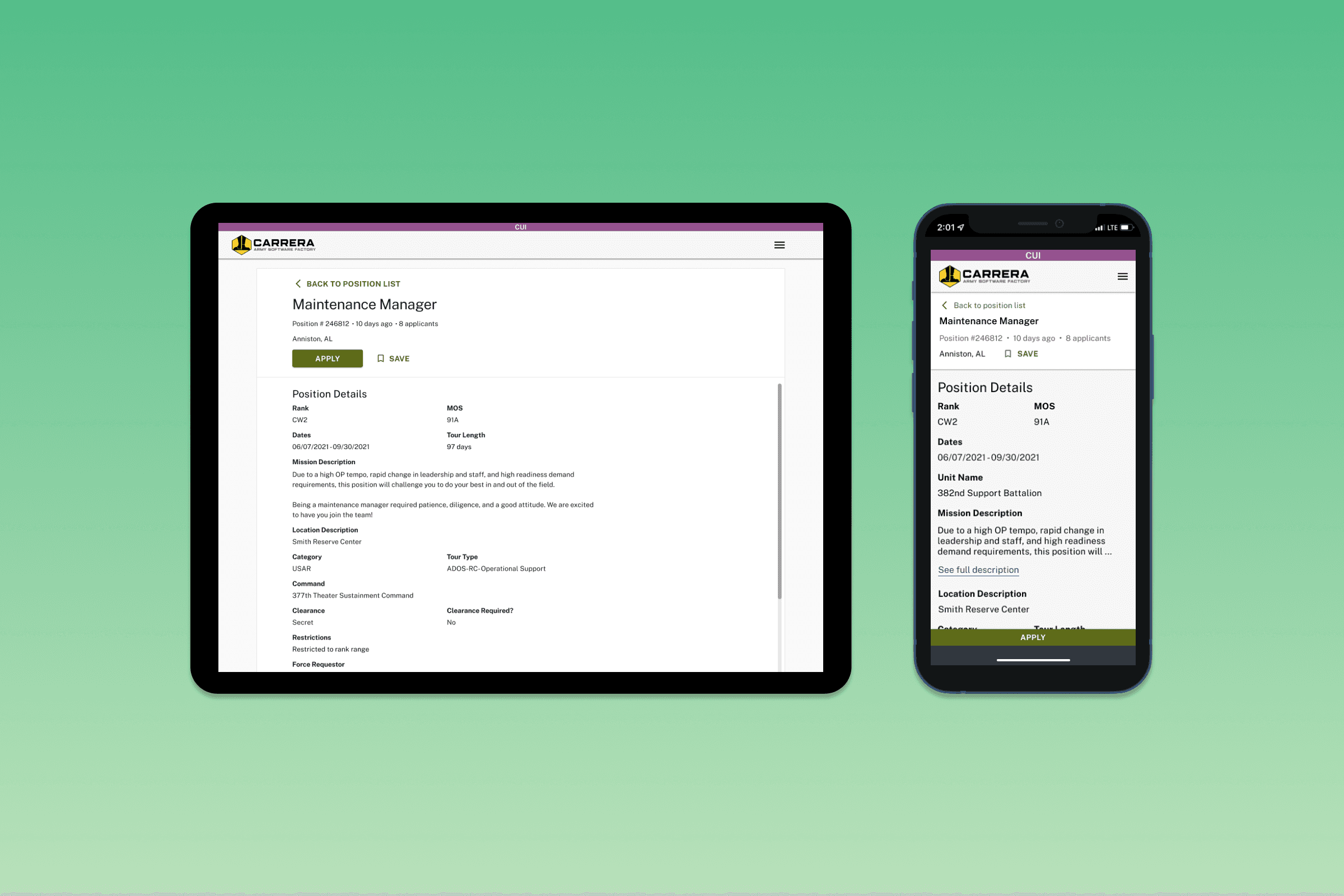
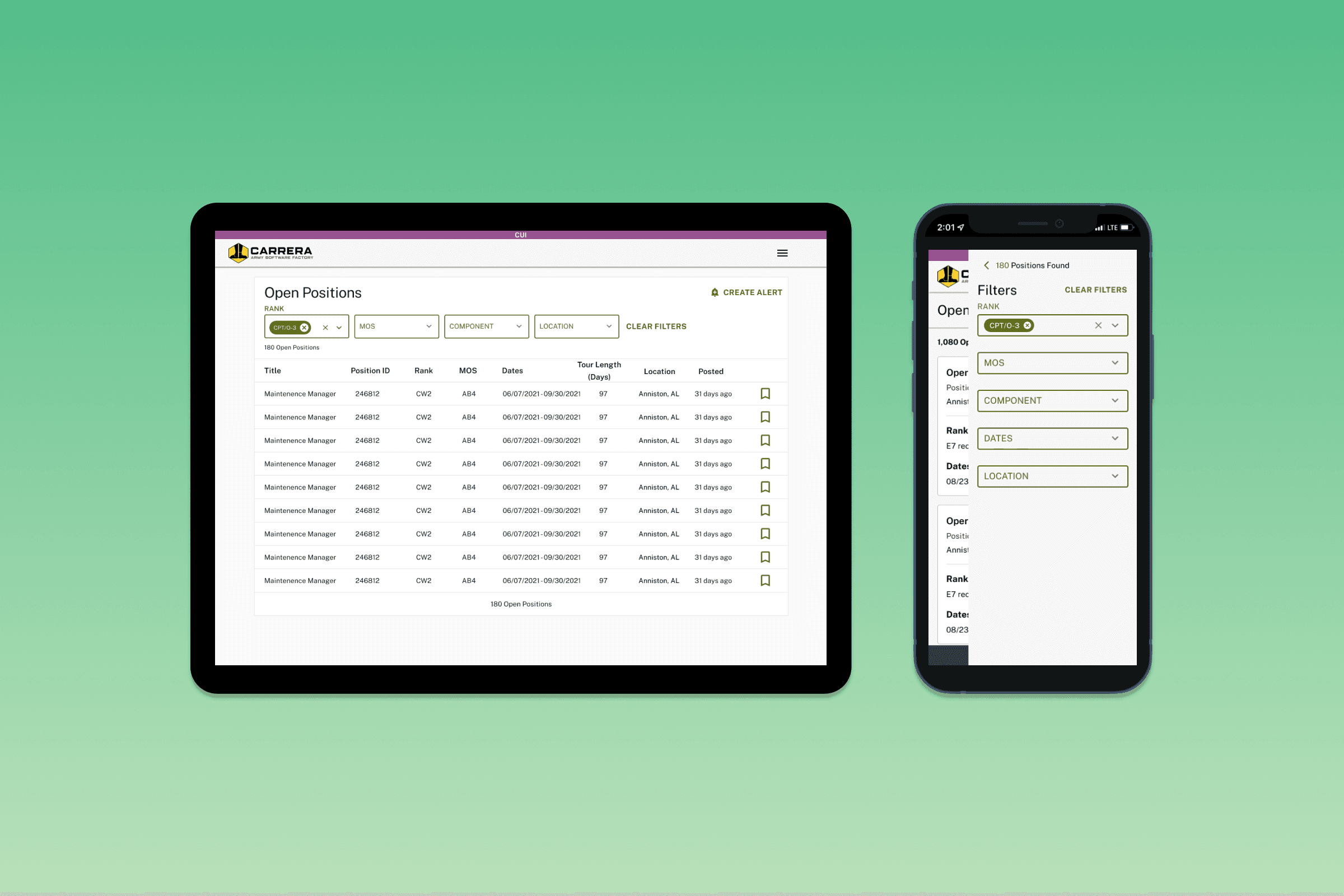
It's the detailed, interactive version of designs that closely match the look and feel of the final product.
I turned my mockups into a prototype that's ready for testing, using gestures and motion, which can help enrich the user experience and increase the usability of the app.

The project schematically :
The redesigned experience launched successfully and quickly became the most widely used application produced by the Army’s software factory program at the time.
The product dramatically reduced the need for soldiers to travel to a physical base simply to view available positions. Soldiers could now discover opportunities remotely, compare roles, and apply before positions closed.
Beyond the product itself, the work created long-term organizational value. My Army design counterpart—who began the project with no formal product design background—outperformed her peers in her certification assessment after our collaboration, validating the effectiveness of the design practices introduced during the project.
30,000+ total users, averaging 426 weekly active users
93 applicants per week and 54 applicants per job on average
Received a Certificate of Appreciation from Army leadership for mentoring and design enablement