Architect
Modernizing a legacy digital banking platform to reduce task failure and improve customer trust

Overview
Broadway National Bank’s digital banking platform was driving customer frustration and increasing operational costs due to poor usability in core financial tasks.
As a Product Designer at Fiserv, I led the redesign of their web and mobile banking experience, making deliberate tradeoffs between flexibility and clarity in order to improve task completion and restore user trust.
Primary outcomes:
Increased App Store ratings from 2.4 → 4.8 on Apple and Google Play
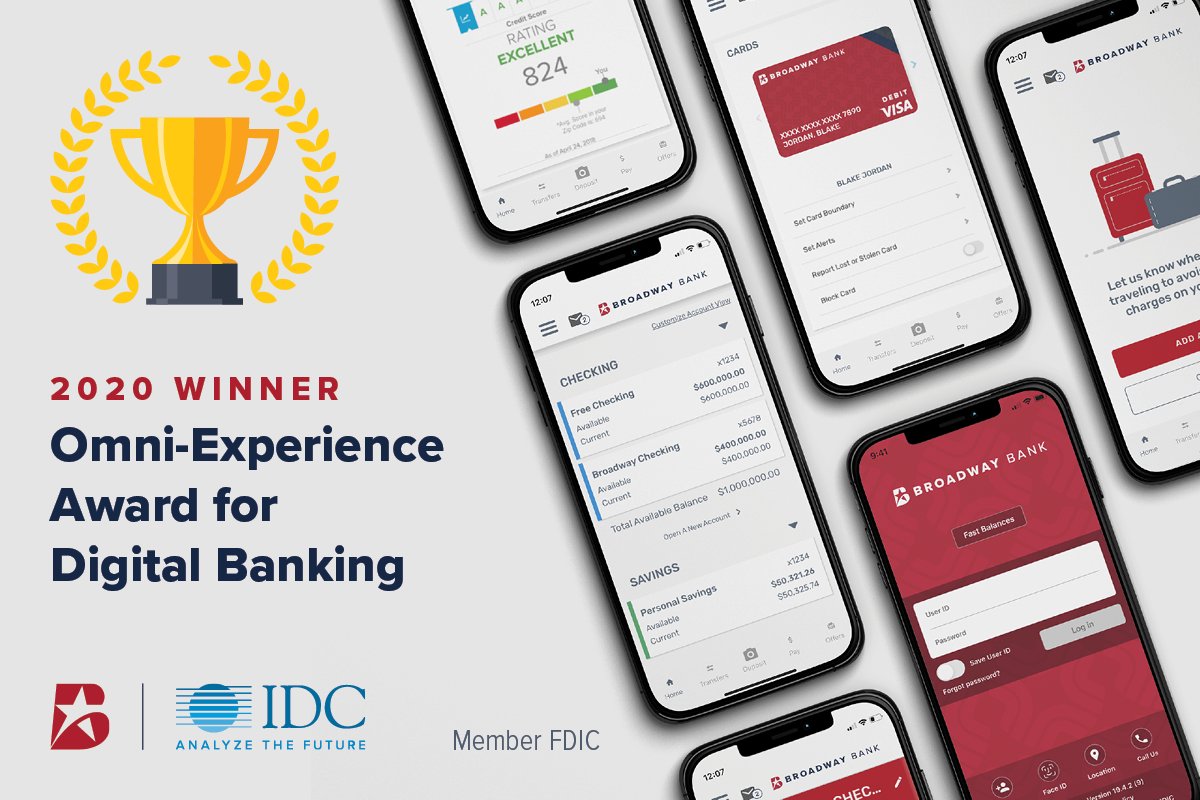
Recognized with the 2020 IDC Award for Omni-Experience in Digital Banking
Decreased support tickets related to navigation and transaction errors
Problem and Business Context
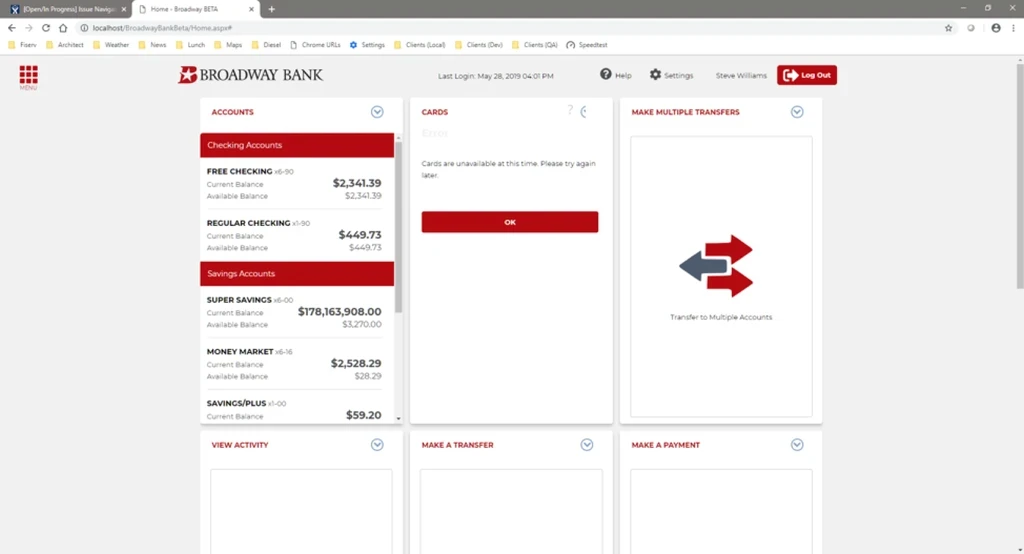
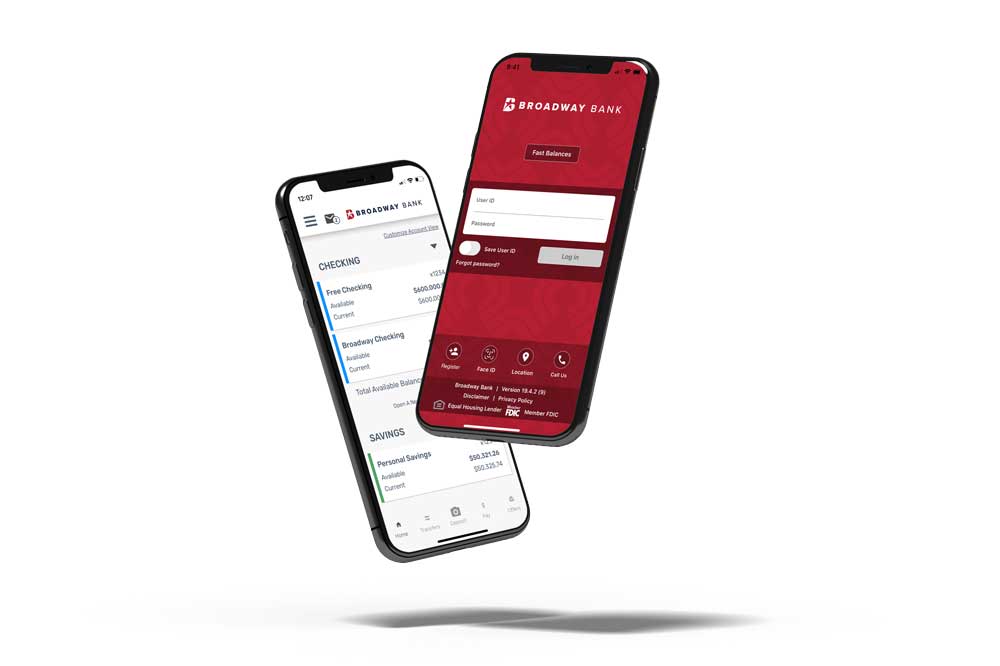
Broadway Bank’s legacy platform Architect (seen above) had accumulated years of customization, resulting in:
Inconsistent navigation
Confusing task flows
Poor mobile usability
High support volume
This created three business risks:
Customer churn driven by failed financial actions
Rising operational cost from usability-related support tickets
Limited scalability of the platform for future institutions
The redesign required a careful tradeoff between modernizing the experience and preserving existing customer behavior to avoid short-term disruption.
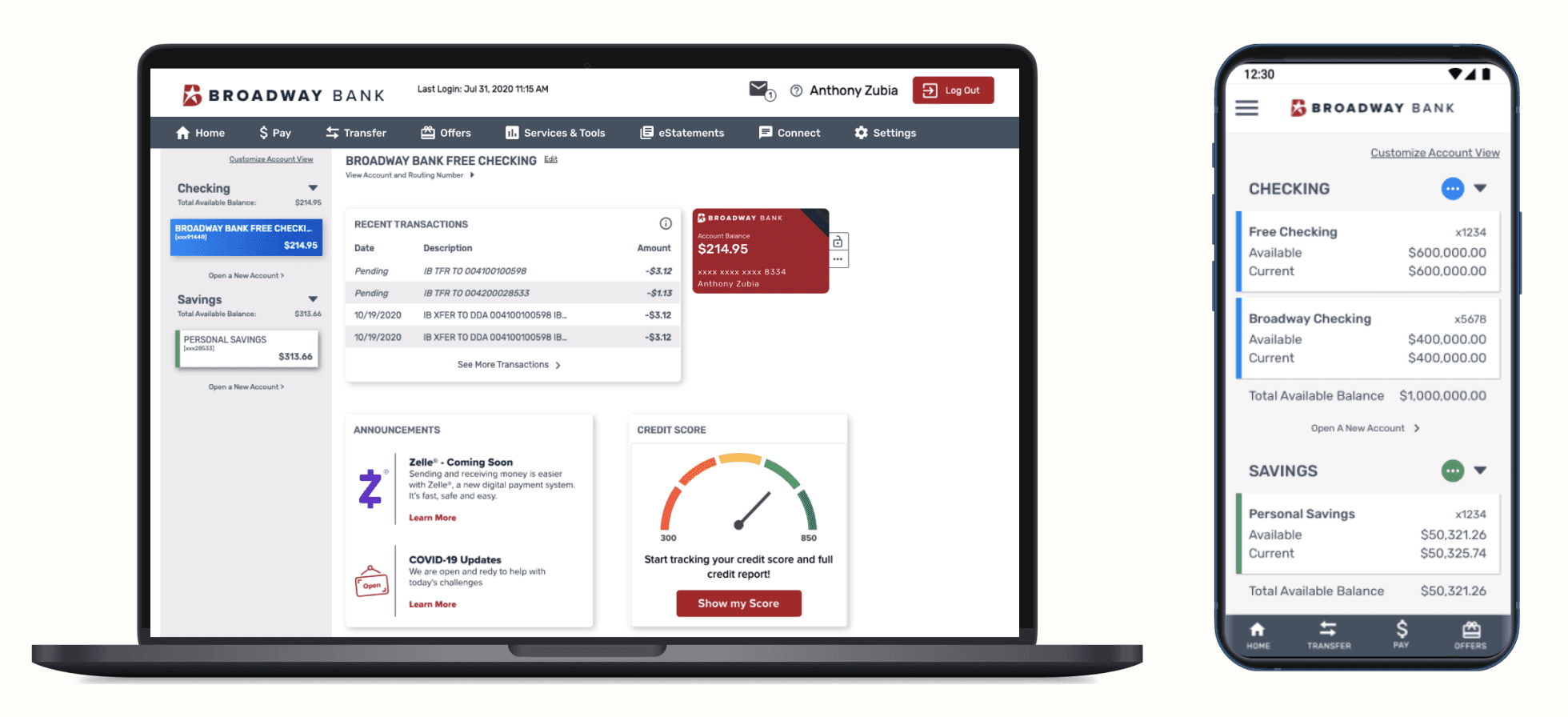
Solution and Tradeoffs
Several critical tradeoffs shaped the solution:
Tradeoff 1: Flexibility vs. Clarity
Support logs showed most failures occurred in basic tasks, not advanced features.
Decision:
We chose clarity over deep configurability.
Outcome:
Users could locate and complete key actions faster, with fewer errors.
Tradeoff 2: Visual refresh vs. interaction consistency
A purely visual update would not address the root cause of confusion.
Decision:
We prioritized interaction consistency across flows rather than stylistic novelty.
Outcome:
User behavior became more predictable, reducing hesitation during financial actions.
Tradeoff 3: Mobile-first patterns vs. legacy desktop behavior
Optimizing solely for mobile risked breaking learned desktop habits.
Decision:
We designed a shared interaction model across devices.
Outcome:
Adoption improved without increasing support volume from existing customers.
What we intentionally did NOT build
To support these tradeoffs, we deprioritized:
Advanced personalization
Highly modular dashboards
Experimental navigation
The outcome of this constraint was a simpler, more learnable system.
Research and Risk Mitigation
Research was used to reduce decision risk, not to prove perfection.
This included:
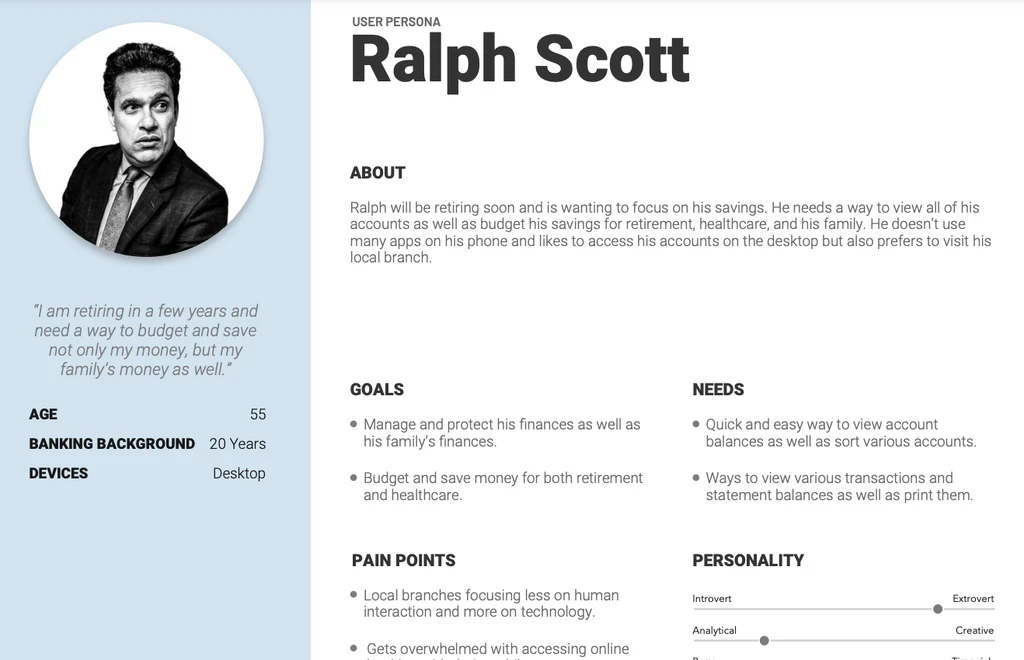
User Personas
Forrester Benchmark Report
App Store reviews
Customer support logs
Engineering and platform constraints
Key insight:
Frustration stemmed less from outdated visuals and more from uncertainty during financial actions (e.g., “Did my transfer succeed?”).
This reframed the problem from:
“modernize UI” → “reduce ambiguity in high-risk actions.”
The outcome of this reframing was a focus on task success over cosmetic change.
Design Strategy
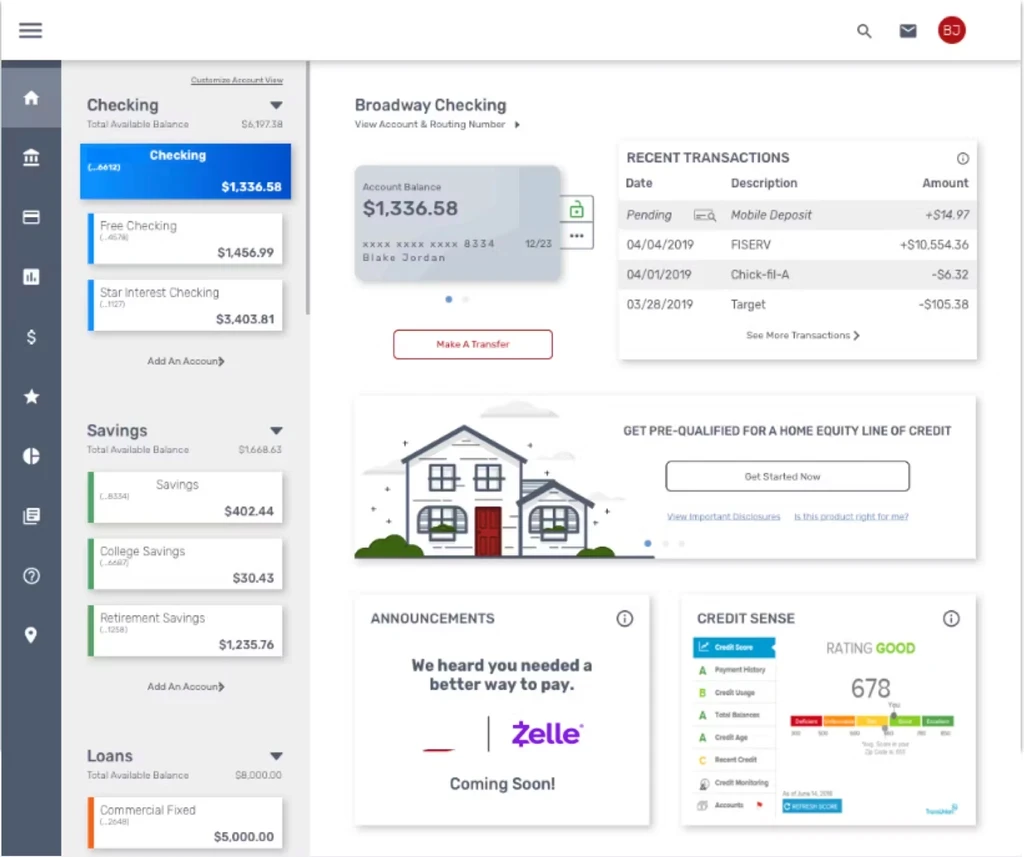
We focused design effort on the highest-impact flows:
Transfers
Bill payments
Account overview
Card controls
Key decisions included:
Shifting from feature-based to task-based navigation
Elevating balances, recent activity, and next actions
Introducing clearer confirmation and error states
Each change was evaluated based on its outcome:
Could users complete financial actions with less hesitation and fewer errors?
Leadership and Collaboration
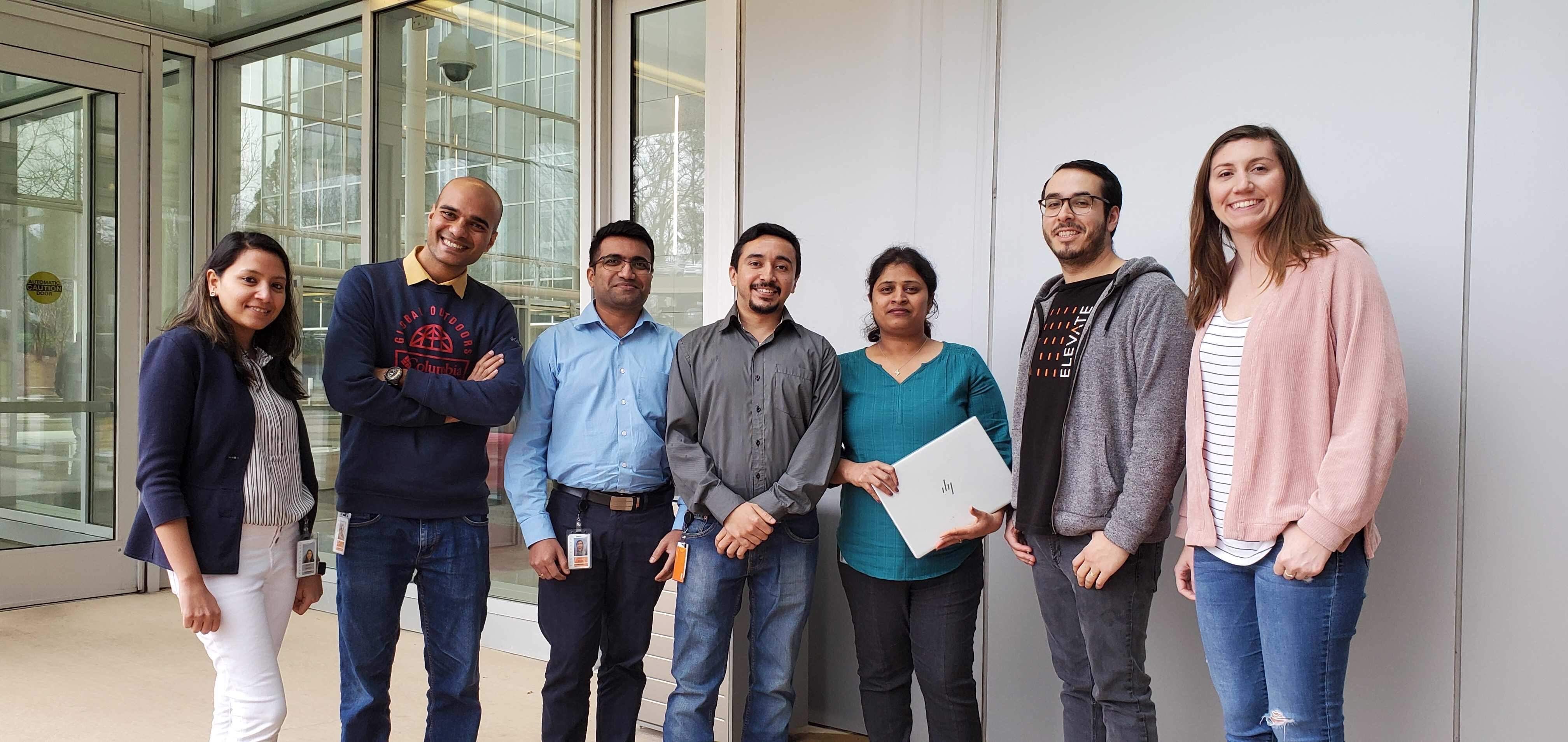
I worked cross-functionally with:
Product management
Engineering
Broadway Bank VP client stakeholders
Internal platform teams
My contributions included:
Aligning multiple engineering teams around shared interaction patterns
Advocating for usability improvements over legacy customizations
Mentoring 2 junior designers contributing to the design system
Outcome:
Design patterns became reusable platform assets rather than one-off solutions.
Reflection
This project reinforced that strong financial UX is built on intentional tradeoffs.
Key lessons:
Clarity often outperforms flexibility
Trust is shaped by feedback and predictability
Design impact is best measured by operational outcomes
If I repeated this project, I would:
Instrument task success earlier
Validate navigation tradeoffs with faster experiments
Press Links
Broadway Bank wins 2020 IDC Omni-Experience Award for Digital Banking by Broadway Bank
Fiserv Named Overall Real Results Winner by Business Wire